
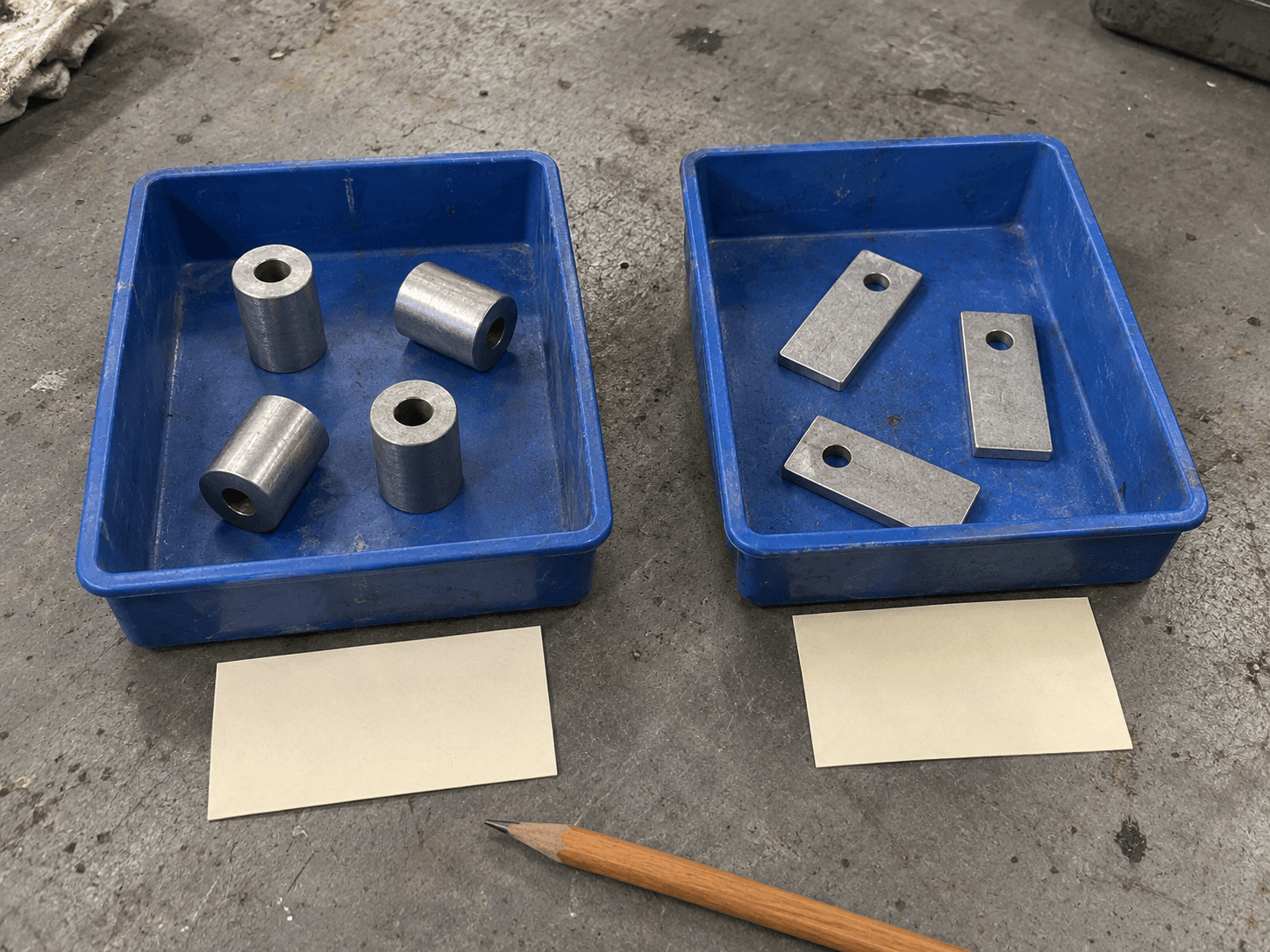
Different parts may be candidates for the same mass-finishing batch, but fitting in the machine is not enough. Before combining them, confirm that they can use the same media, compound and cycle, meet their own acceptance requirements, and be separated and identified afterward. Until that combination has been checked in a representative trial, keep the loads separate.
Start with this question: what does each part need, and what must not change?
Same material does not mean the same finishing job
Two part numbers made from the same alloy can have different burrs, surface requirements and critical edges. One may need a light cleanup; the other may need more material removed. A shared cycle must work for both, not just produce a good average result across the load.
Incoming condition matters, too. Changing burr conditions from tool or die wear can disrupt an established finishing cycle. Parts that used to behave alike should not automatically be treated as equivalent after their incoming condition changes.
If the materials differ, ask the compound supplier to confirm suitability for every material in the proposed load, including cleaning and corrosion protection requirements. A product that works on one part is not, by itself, evidence that it fits the whole mixture.
Five checks before combining part numbers
| Check | What to establish before a mixed-load trial |
|---|---|
| Finish and feature limits | Record the burr, surface and appearance targets for each part, plus the dimensions and edges that must stay within limits. |
| Media and chemistry | Check media access, lodging risk and compound compatibility for every part family, not only the largest or easiest part. |
| Contact and movement | Check whether the proposed parts can strike, nest inside or trap one another. Define which surfaces must remain free of contact marks. |
| Separation and identification | Confirm how every part will leave the media and return to the correct part number and production lot. |
| Complete workflow | Include rinsing, drying, sorting and inspection. Agree on the full process, not just a shared machine cycle. |
These are screening questions, not a universal recipe. The machine, load and acceptance criteria determine the trial setup.
Media is not just an abrasive. It also helps keep parts apart. Media-to-parts loading affects part-on-part contact, while part geometry, media size and screen design affect separation. Adding another part family changes the load that needs to be evaluated; do not assume an existing setup automatically covers it.
For a closer look at those two risks, see why parts get dings during mass finishing and how to separate finished parts from tumbling media.
What should a useful mixed-load trial prove?
Agree on the proposed mixture before running it: which part numbers, how many of each, their incoming condition, and the machine and consumables being considered. Include representative parts from every family. A result for one part number does not establish the result for another.
Evaluate each family separately after processing. Did its burr requirement pass? Were critical edges and dimensions preserved? Did any parts pick up marks or retain media? Can the finished pieces be sorted without losing their required identity?
Also record the time spent separating, sorting and inspecting. Combining loads is not useful merely because it reduces the number of machine starts. Compare the complete workflow and the quantity of accepted parts. If sorting or rework absorbs the saved handling time, separate batches may be the better choice.
Keep the approved mixture in the process record. If the relative quantities or part families change, review that change rather than quietly treating the new load as the proven one. Our process-record checklist covers the production handoff.
When is keeping parts separate the better starting point?
Start separately when the finish targets conflict, compatibility is unconfirmed, contact marks are unacceptable, or the parts cannot reliably be sorted back into their required lots. A shared alloy or similar appearance does not resolve those questions.
Nor does “the machine handles both materials” establish that it should handle them together. Equipment capability and mixed-load suitability are different decisions.
What should you send Richwood?
Send the material, dimensions, incoming condition and desired finish for each proposed part family. Identify critical features and explain why you want to combine the loads: smaller orders, less handling, or a production bottleneck. Include your current machine and process details if you have them.
Contact Richwood about the proposed part mix. Confirm the trial scope, inspection responsibilities and commercial terms before shipping parts. The next step is to evaluate the actual combination, not promise that one setup will suit everything in the shop.